JobManager 在 Flink 集群中发挥着重要的作用,包括任务调度和资源管理等工作。如果 JobManager 宕机,那么整个集群的任务都将失败。为了解决 JobManager 的单点问题,Flink 也设计了 HA 机制来保障整个集群的稳定性。
基本概念 在 JobManager 启动时,调用 HighAvailabilityServicesUtils.createHighAvailabilityServices 来创建 HA 服务,HA 依赖的服务都被封装在 HighAvailabilityServices 中。当前 Flink 内部支持两种高可用模式,分别是 ZooKeeper 和 KUBERNETES。
1
2
3
4
5
6
7
case ZOOKEEPER: return createZooKeeperHaServices(configuration, executor, fatalErrorHandler); case KUBERNETES: return createCustomHAServices( "org.apache.flink.kubernetes.highavailability.KubernetesHaServicesFactory" , configuration, executor);
HighAvailabilityServices 中提供的关键组件包括:
LeaderRetrievalService:服务发现,用于获取当前 leader 的地址。目前用到服务发现的组件有 ResourceManager、Dispatcher、JobManager、ClusterRestEndpoint。
LeaderElection:选举服务,从多个候选者中选出一个作为 leader。用到选举服务的同样是 ResourceManager、Dispatcher、JobManager、ClusterRestEndpoint 这四个。
CheckpointRecoveryFactory:Checkpoint 恢复组件的工厂类,提供了创建 CompletedCheckpointStore 和 CheckpointIDCounter 的方法。CompletedCheckpointStore 是用于存储已完成的 checkpoint 的元信息,CheckpointIDCounter 是用于生成 checkpoint ID。
ExecutionPlanStore:用于存储执行计划。
JobResultStore:用于存储作业结果,这里有两种状态,一种是 dirty,表示作业没有被完全清理,另一种是 clean,表示作业清理工作已经执行完成了。
BlobStore:存储作业运行期间的一些二进制文件。
选举服务 Flink 的选举是依靠 LeaderElection 和 LeaderContender 配合完成的。LeaderElection 是 LeaderElectionService 的代理接口,提供了注册候选者、确认 leader 和 判断候选者是否是 leader 三个接口。LeaderContender 则是用来表示候选者对象。当一个 LeaderContender 当选 leader 后,LeaderElectionService 会为其生成一个 leaderSessionId,LeaderContender 会调用 confirmLeadershipAsync 发布自己的地址。选举服务的具体实现在 LeaderElectionDriver 接口中。
服务发现 服务发现的作用是获取各组件的 leader 地址。服务发现依赖 LeaderRetrievalService 和 LeaderRetrievalListener。LeaderRetrievalService 可以启动一个监听,当有新的 leader 当选时,会调用 LeaderRetrievalListener 的 notifyLeaderAddress 方法。
信息保存 当 leader 发生切换时,新的 leader 需要获取到旧 leader 存储的信息,这就需要旧 leader 把这些信息存在一个公共的存储上。它可以是 ZooKeeper 或 Kubernetes 的存储,也可以是分布式文件系统的存储。
基于 ZooKeeper 的 HA 选举服务 前面我们提到了选举服务主要依赖 LeaderElection 和 LeaderContender 配合完成。我们就以 JobManager 为例,看一下机遇 ZooKeeper 的选举流程的具体实现。
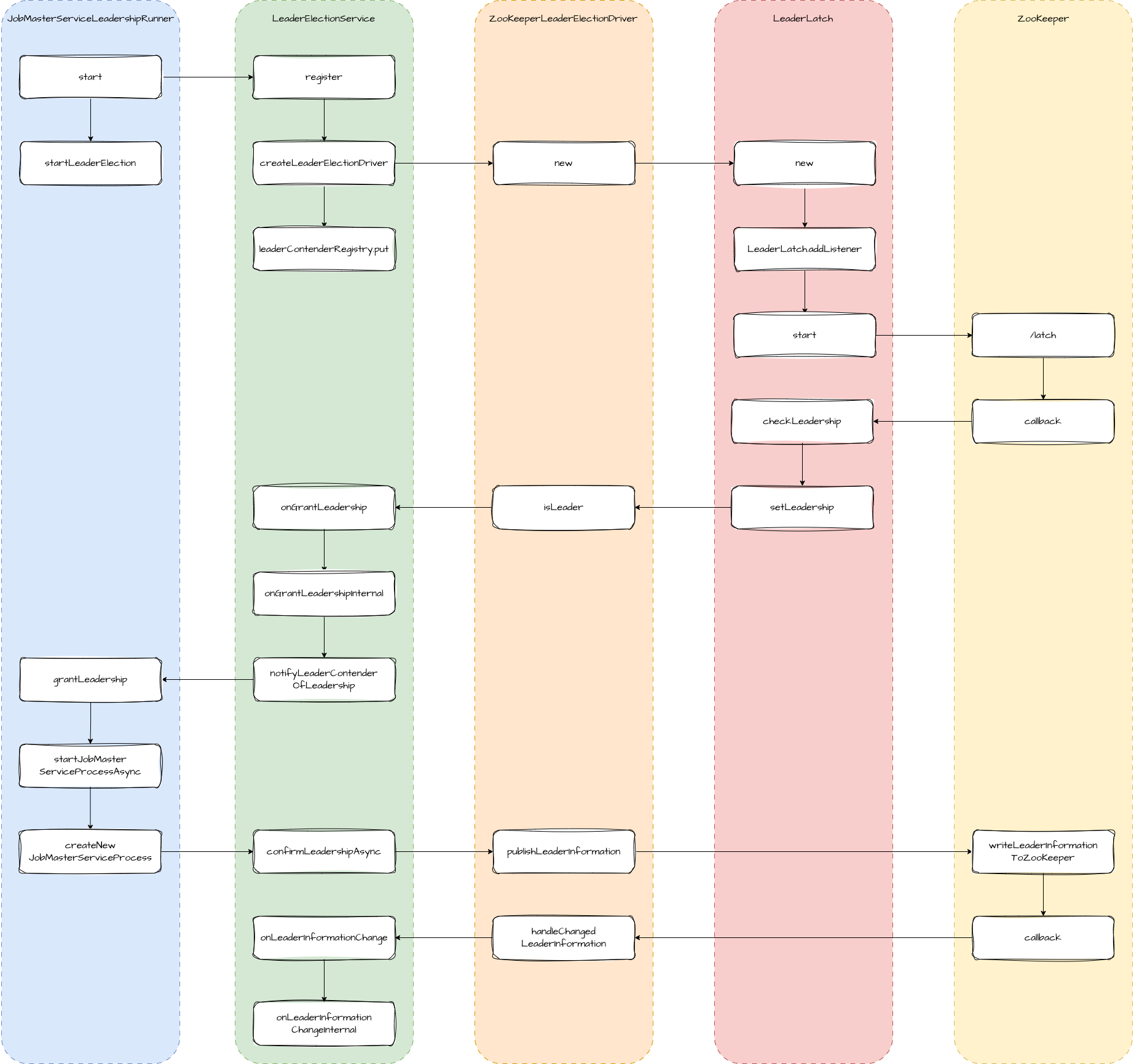
图中 JobMasterServiceLeadershipRunner 是 LeaderContender 的实现类。在启动服务时,会向 LeaderElection 注册自己的信息,实际执行者是 DefaultLeaderElectionService。它先创建了 LeaderElectionDriver,然后将 LeaderContender 保存在 leaderContenderRegistry 中。选举的核心逻辑封装在 LeaderElectionDriver 中。
在创建 LeaderElectionDriver 时,会创建 LeaderLatch 对象和 TreeCache 对象, LeaderLatch 封装了与 ZooKeeper 关联的回调,会接收一个 LeaderElectionDriver 作为监听。TreeCache 主要用于监听 ZooKeeper 中 leader 节点的变更。
1
2
3
4
5
6
7
8
9
10
11
12
13
14
15
16
17
18
19
20
21
22
23
24
25
26
27
28
29
30
31
32
33
34
35
36
37
public ZooKeeperLeaderElectionDriver ( CuratorFramework curatorFramework, LeaderElectionDriver.Listener leaderElectionListener) throws Exception { ... this .leaderLatch = new LeaderLatch (curatorFramework, ZooKeeperUtils.getLeaderLatchPath()); this .treeCache = ZooKeeperUtils.createTreeCache( curatorFramework, "/" , new ZooKeeperLeaderElectionDriver .ConnectionInfoNodeSelector()); treeCache .getListenable() .addListener( (client, event) -> { switch (event.getType()) { case NODE_ADDED: case NODE_UPDATED: Preconditions.checkNotNull( event.getData(), "The ZooKeeper event data must not be null." ); handleChangedLeaderInformation(event.getData()); break ; case NODE_REMOVED: Preconditions.checkNotNull( event.getData(), "The ZooKeeper event data must not be null." ); handleRemovedLeaderInformation(event.getData().getPath()); break ; } }); leaderLatch.addListener(this ); ... leaderLatch.start(); treeCache.start(); }
我们进入到 LeaderLatch 的 start 方法。它的内部是在 ZooKeeper 上创建 latch-xxx 节点。xxx 是当前 LeaderLatch 的 ID,它由 ZooKeeper 生成,ID 最小的当选 Leader。
1
2
3
4
5
6
7
8
9
10
11
12
13
14
15
16
17
18
19
20
21
22
23
24
25
26
27
28
29
30
31
32
33
34
35
36
37
38
39
40
41
42
43
private void checkLeadership (List<String> children) throws Exception { if (this .debugCheckLeaderShipLatch != null ) { this .debugCheckLeaderShipLatch.await(); } String localOurPath = (String)this .ourPath.get(); List<String> sortedChildren = LockInternals.getSortedChildren("latch-" , sorter, children); int ourIndex = localOurPath != null ? sortedChildren.indexOf(ZKPaths.getNodeFromPath(localOurPath)) : -1 ; this .log.debug("checkLeadership with id: {}, ourPath: {}, children: {}" , new Object []{this .id, localOurPath, sortedChildren}); if (ourIndex < 0 ) { this .log.error("Can't find our node. Resetting. Index: " + ourIndex); this .reset(); } else if (ourIndex == 0 ) { this .lastPathIsLeader.set(localOurPath); this .setLeadership(true ); } else { this .setLeadership(false ); String watchPath = (String)sortedChildren.get(ourIndex - 1 ); Watcher watcher = new Watcher () { public void process (WatchedEvent event) { if (LeaderLatch.this .state.get() == LeaderLatch.State.STARTED && event.getType() == EventType.NodeDeleted) { try { LeaderLatch.this .getChildren(); } catch (Exception ex) { ThreadUtils.checkInterrupted(ex); LeaderLatch.this .log.error("An error occurred checking the leadership." , ex); } } } }; BackgroundCallback callback = new BackgroundCallback () { public void processResult (CuratorFramework client, CuratorEvent event) throws Exception { if (event.getResultCode() == Code.NONODE.intValue()) { LeaderLatch.this .getChildren(); } } }; ((ErrorListenerPathable)((BackgroundPathable)this .client.getData().usingWatcher(watcher)).inBackground(callback)).forPath(ZKPaths.makePath(this .latchPath, watchPath)); } }
当选 Leader 后,会回调 LeaderElectionDriver 的 isLeader 方法,如果未当选,则继续监听 latch 节点的变更。isLeader 会继续回调 LeaderElection 的 onGrantLeadership 方法,接着调用 LeaderContender 的 grantLeadership。这时会启动 JobMaster 服务,然后调用 LeaderElection 的 confirmLeadershipAsync 来确认当选成功。确认的过程是由 LeaderElectionDriver 来执行的。主要作用是把当前 leader 的信息写回到 ZooKeeper 的 connection_info 节点。
1
2
3
4
5
6
7
8
9
10
11
12
13
14
15
16
17
18
19
20
21
22
23
24
25
26
27
public void publishLeaderInformation (String componentId, LeaderInformation leaderInformation) { Preconditions.checkState(running.get()); if (!leaderLatch.hasLeadership()) { return ; } final String connectionInformationPath = ZooKeeperUtils.generateConnectionInformationPath(componentId); LOG.debug( "Write leader information {} for component '{}' to {}." , leaderInformation, componentId, ZooKeeperUtils.generateZookeeperPath( curatorFramework.getNamespace(), connectionInformationPath)); try { ZooKeeperUtils.writeLeaderInformationToZooKeeper( leaderInformation, curatorFramework, leaderLatch::hasLeadership, connectionInformationPath); } catch (Exception e) { leaderElectionListener.onError(e); } }
服务发现 梳理完选举服务的源码后,我们再来看一下服务发现的过程。我们以 TaskManager 获取 JobManager 的 leader 为例。
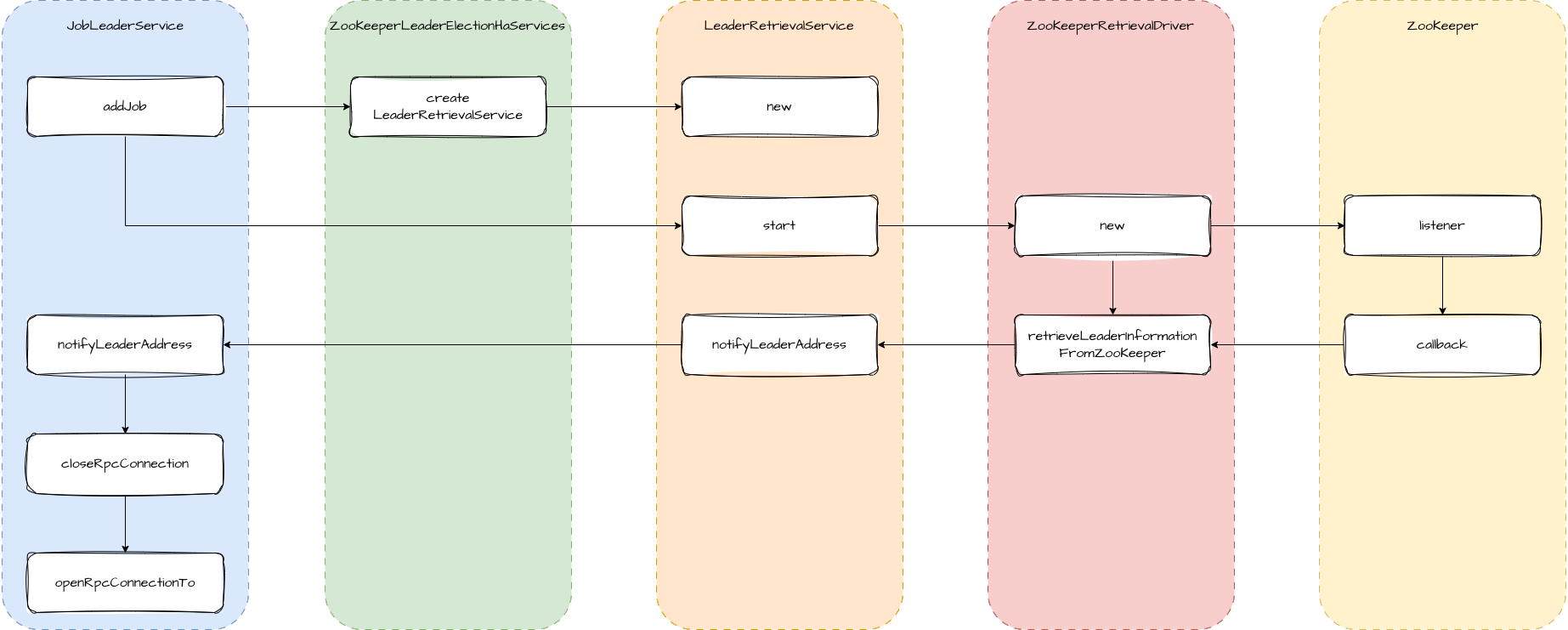
当我们往 TaskManager 添加任务时,会调用 JobLeaderService 的 addJob 方法。这里会先获取 LeaderRetrieval,然后调用 start 方法注册 LeaderRetrievalListener 监听,并创建 LeaderRetrievalDriver。在 LeaderRetrievalDriver 中主要是向 ZooKeeper 注册 connection_info 节点的变更。
如果发生变更,ZooKeeper 会回调 LeaderRetrievalDriver.retrieveLeaderInformationFromZooKeeper 方法。我们从 ZooKeeper 获取到 leader 的地址和 sessionId 后,就回调 LeaderRetrievalService.notifyLeaderAddress 方法。最终调用到 JobLeaderService 的 notifyLeaderAddress 方法,这个方法中就是断开与旧 leader 的连接,增加与新 leader 的连接。
信息保存 最后我们再来看信息保存相关的源码。在 JobManager 完成一次 Checkpoint 时,会执行 CheckpointCoordinator.completePendingCheckpoint 方法,跟随调用链路可以找到 ZooKeeperStateHandleStore.addAndLock 方法,这里会把状态写入到文件系统中,然后把文件路径保存在 ZooKeeper 中。
1
2
3
4
5
6
7
8
9
10
11
12
13
14
15
16
17
18
19
20
21
22
23
24
25
26
27
28
29
30
31
32
33
34
35
36
37
38
public RetrievableStateHandle<T> addAndLock (String pathInZooKeeper, T state) throws PossibleInconsistentStateException, Exception { checkNotNull(pathInZooKeeper, "Path in ZooKeeper" ); checkNotNull(state, "State" ); final String path = normalizePath(pathInZooKeeper); final Optional<Stat> maybeStat = getStat(path); if (maybeStat.isPresent()) { if (isNotMarkedForDeletion(maybeStat.get())) { throw new AlreadyExistException ( String.format("ZooKeeper node %s already exists." , path)); } Preconditions.checkState( releaseAndTryRemove(path), "The state is marked for deletion and, therefore, should be deletable." ); } final RetrievableStateHandle<T> storeHandle = storage.store(state); final byte [] serializedStoreHandle = serializeOrDiscard(storeHandle); try { writeStoreHandleTransactionally(path, serializedStoreHandle); return storeHandle; } catch (KeeperException.NodeExistsException e) { return storeHandle; } catch (Exception e) { if (indicatesPossiblyInconsistentState(e)) { throw new PossibleInconsistentStateException (e); } storeHandle.discardState(); throw e; } }
至此,基于 ZooKeeper 的 HA 逻辑我们就梳理完了。从 1.12 版本开始,Flink 还支持了 Kubernetes 高可用,下面我们再来一下它是如何实现的。
基于 Kubernetes 的 HA 选举服务 通过前面的学习,我们已经了解到,选举的主要逻辑是在 LeaderElectionDriver 中,因此,我们直接来看 KubernetesLeaderElectionDriver 的逻辑即可。创建 KubernetesLeaderElectionDriver 时,创建并启动了 KubernetesLeaderElector。这个类似于 ZooKeeper 逻辑中 LeaderLatch,会跟 Kubernetes 底层的选举逻辑交互,同时注册监听。
1
2
3
4
5
6
7
8
9
10
11
12
13
14
15
16
17
18
19
20
21
22
23
24
25
26
27
28
29
30
31
32
33
34
35
36
37
38
39
40
41
public KubernetesLeaderElector ( NamespacedKubernetesClient kubernetesClient, KubernetesLeaderElectionConfiguration leaderConfig, LeaderCallbackHandler leaderCallbackHandler, ExecutorService executorService) { this .kubernetesClient = kubernetesClient; this .leaderElectionConfig = new LeaderElectionConfigBuilder () .withName(leaderConfig.getConfigMapName()) .withLeaseDuration(leaderConfig.getLeaseDuration()) .withLock( new ConfigMapLock ( new ObjectMetaBuilder () .withNamespace(kubernetesClient.getNamespace()) .withName(leaderConfig.getConfigMapName()) .withLabels( KubernetesUtils.getConfigMapLabels( leaderConfig.getClusterId())) .build(), leaderConfig.getLockIdentity())) .withRenewDeadline(leaderConfig.getRenewDeadline()) .withRetryPeriod(leaderConfig.getRetryPeriod()) .withReleaseOnCancel(true ) .withLeaderCallbacks( new LeaderCallbacks ( leaderCallbackHandler::isLeader, leaderCallbackHandler::notLeader, newLeader -> LOG.info( "New leader elected {} for {}." , newLeader, leaderConfig.getConfigMapName()))) .build(); this .executorService = executorService; LOG.info( "Create KubernetesLeaderElector on lock {}." , leaderElectionConfig.getLock().describe()); }
选举成功后,会回调 LeaderElectionListener.onGrantLeadership 方法。后续的调用链路还是会调用到 KubernetesLeaderElectionDriver.publishLeaderInformation 方法。这个方法是把 leader 信息写到 Kubernetes 的 configMap 中。
1
2
3
4
5
6
7
8
9
10
11
12
13
14
15
16
17
18
19
public void publishLeaderInformation (String componentId, LeaderInformation leaderInformation) { Preconditions.checkState(running.get()); try { kubeClient .checkAndUpdateConfigMap( configMapName, updateConfigMapWithLeaderInformation(componentId, leaderInformation)) .get(); } catch (InterruptedException | ExecutionException e) { leaderElectionListener.onError(e); } LOG.debug( "Successfully wrote leader information {} for leader {} into the config map {}." , leaderInformation, componentId, configMapName); }
服务发现 服务发现的逻辑在 KubernetesLeaderRetrievalDriver 类中,在创建时,会将内部类 ConfigMapCallbackHandlerImpl 注册为监听回调类。
当 configMap 有新增或变更后,会回调 LeaderRetrievalService.notifyLeaderAddress 方法。
1
2
3
4
5
6
7
8
9
10
11
12
13
14
15
16
17
18
19
20
21
22
23
private class ConfigMapCallbackHandlerImpl implements FlinkKubeClient .WatchCallbackHandler<KubernetesConfigMap> { @Override public void onAdded (List<KubernetesConfigMap> configMaps) { final KubernetesConfigMap configMap = getOnlyConfigMap(configMaps, configMapName); final LeaderInformation leaderInformation = leaderInformationExtractor.apply(configMap); if (!leaderInformation.isEmpty()) { leaderRetrievalEventHandler.notifyLeaderAddress(leaderInformation); } } @Override public void onModified (List<KubernetesConfigMap> configMaps) { final KubernetesConfigMap configMap = getOnlyConfigMap(configMaps, configMapName); leaderRetrievalEventHandler.notifyLeaderAddress( leaderInformationExtractor.apply(configMap)); } ... }
信息保存 信息保存的逻辑和 ZooKeeper 也非常类似。即先把 state 保存在文件系统,然后把存储路径写到 Kubernetes 写到 configMap 中。具体可以看 KubernetesStateHandleStore.addAndLock 方法。
总结 本文我们一起梳理了 Flink 中 JobManager 的 HA 机制相关源码。目前 Flink 支持 ZooKeeper 和 Kubernetes 两种实现。在梳理过程中,我们以 JobManager 为例,其他几个用到高可用的服务的选举逻辑也是一样的。