书接上回,前文我们梳理的 Checkpoint 机制的源码,但是对于如何写入状态数据并没有深入了解。今天就一起来梳理一下这部分代码。
写在前面
前面我们了解到在 StreamOperatorStateHandler.snapshotState 方法中会创建四个 Future,用来支持不同类型的状态写入。
1
2
3
4
5
6
7
8
9
10
11
12
13
14
15
16
17
18
19
| snapshotInProgress.setKeyedStateRawFuture(snapshotContext.getKeyedStateStreamFuture());
snapshotInProgress.setOperatorStateRawFuture(
snapshotContext.getOperatorStateStreamFuture());
if (null != operatorStateBackend) {
snapshotInProgress.setOperatorStateManagedFuture(
operatorStateBackend.snapshot(
checkpointId, timestamp, factory, checkpointOptions));
}
if (useAsyncState && null != asyncKeyedStateBackend) {
if (isCanonicalSavepoint(checkpointOptions.getCheckpointType())) {
throw new UnsupportedOperationException("Not supported yet.");
} else {
snapshotInProgress.setKeyedStateManagedFuture(
asyncKeyedStateBackend.snapshot(
checkpointId, timestamp, factory, checkpointOptions));
}
}
|
我们主要关心 ManagedState,ManagedState 都是调用 Snapshotable.snapshot 方法来写入数据的,下面具体看 KeyedState 和 OperatorState 的具体实现。
KeyedState
KeyedState 我们以 HeapKeyedStateBackend 为例,这里先是创建了一个 SnapshotStrategyRunner 实例,SnapshotStrategyRunner 是一个快照策略的一个执行类,创建完成后就会调用 snapshot 方法。在这个 snapshot 方法中主要做了做了下面几件事:
同步拷贝状态数据的引用。
创建 Checkpoint 输出流 CheckpointStateOutputStream
完成 Checkpoint 持久化
返回元信息结果
状态数据引用拷贝
在 HeapSnapshotStrategy 的 syncPrepareResources 方法中调用了 HeapSnapshotResources.create 方法。这里有一个比较重要的参数是 registeredKVStates,它代表我们在业务代码中注册的状态数据表。
1
2
3
4
| ValueStateDescriptor<Tuple2<Long, Long>> descriptor =
new ValueStateDescriptor<>(
"average",
TypeInformation.of(new TypeHint<Tuple2<Long, Long>>() {}));
|
例如我们这样注册状态数据表,那么 registeredKVStates 的 key 就是 average,value 就是状态表,它通常是一个 CopyOnWriteStateTable。具体的状态数据引用拷贝的逻辑在 processSnapshotMetaInfoForAllStates 方法中。
1
2
3
4
5
6
7
8
9
10
11
12
13
14
15
16
17
18
19
| private static void processSnapshotMetaInfoForAllStates(
List<StateMetaInfoSnapshot> metaInfoSnapshots,
Map<StateUID, StateSnapshot> cowStateStableSnapshots,
Map<StateUID, Integer> stateNamesToId,
Map<String, ? extends StateSnapshotRestore> registeredStates,
StateMetaInfoSnapshot.BackendStateType stateType) {
for (Map.Entry<String, ? extends StateSnapshotRestore> kvState :
registeredStates.entrySet()) {
final StateUID stateUid = StateUID.of(kvState.getKey(), stateType);
stateNamesToId.put(stateUid, stateNamesToId.size());
StateSnapshotRestore state = kvState.getValue();
if (null != state) {
final StateSnapshot stateSnapshot = state.stateSnapshot();
metaInfoSnapshots.add(stateSnapshot.getMetaInfoSnapshot());
cowStateStableSnapshots.put(stateUid, stateSnapshot);
}
}
}
|
针对每个 State,这里都创建一个 CopyOnWriteStateTableSnapshot,然后存在 cowStateStableSnapshots 里。这里 CopyOnWriteStateTableSnapshot 就是拷贝数据的引用,因此可以同步执行。
创建 CheckpointStateOutputStream
创建 CheckpointStateOutputStream 的方法是 CheckpointStreamWithResultProvider.createSimpleStream,生产环境通常使用的是 FsCheckpointStateOutputStream。FsCheckpointStateOutputStream 中的参数如下:
1
2
3
4
5
6
7
8
9
10
11
12
13
14
15
16
17
18
19
20
21
22
23
24
25
26
27
28
29
30
|
private final byte[] writeBuffer;
private int pos;
private volatile FSDataOutputStream outStream;
private final int localStateThreshold;
private final Path basePath;
private final FileSystem fs;
private volatile Path statePath;
private String relativeStatePath;
private volatile boolean closed;
private final boolean allowRelativePaths;
|
Checkpoint 持久化
创建完 CheckpointStateOutputStream 之后,会调用 serializationProxy.write(outView) 写入状态的元数据。元数据包括状态的名称、类型、序列化器等一些配置。
元数据写完之后,就开始分组写入状态数据。在写入时,先写 keyGroupId,然后再写当前分组的状态数据
1
2
3
4
5
6
7
8
9
10
11
12
13
14
15
16
17
18
19
20
21
22
| for (int keyGroupPos = 0;
keyGroupPos < keyGroupRange.getNumberOfKeyGroups();
++keyGroupPos) {
int keyGroupId = keyGroupRange.getKeyGroupId(keyGroupPos);
keyGroupRangeOffsets[keyGroupPos] = localStream.getPos();
outView.writeInt(keyGroupId);
for (Map.Entry<StateUID, StateSnapshot> stateSnapshot :
cowStateStableSnapshots.entrySet()) {
StateSnapshot.StateKeyGroupWriter partitionedSnapshot =
stateSnapshot.getValue().getKeyGroupWriter();
try (OutputStream kgCompressionOut =
keyGroupCompressionDecorator.decorateWithCompression(localStream)) {
DataOutputViewStreamWrapper kgCompressionView =
new DataOutputViewStreamWrapper(kgCompressionOut);
kgCompressionView.writeShort(stateNamesToId.get(stateSnapshot.getKey()));
partitionedSnapshot.writeStateInKeyGroup(kgCompressionView, keyGroupId);
}
}
}
|
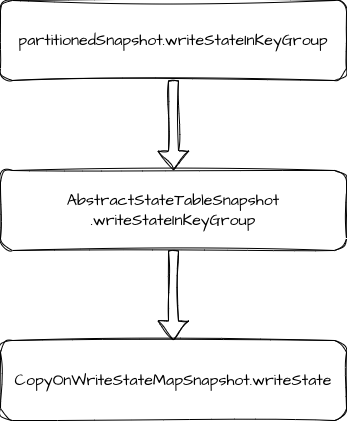
状态数据写入的调用链路如下
1
2
3
4
5
6
7
8
9
10
11
12
13
14
15
16
17
18
19
20
21
22
23
| public void writeState(
TypeSerializer<K> keySerializer,
TypeSerializer<N> namespaceSerializer,
TypeSerializer<S> stateSerializer,
@Nonnull DataOutputView dov,
@Nullable StateSnapshotTransformer<S> stateSnapshotTransformer)
throws IOException {
SnapshotIterator<K, N, S> snapshotIterator =
getIterator(
keySerializer,
namespaceSerializer,
stateSerializer,
stateSnapshotTransformer);
int size = snapshotIterator.size();
dov.writeInt(size);
while (snapshotIterator.hasNext()) {
StateEntry<K, N, S> stateEntry = snapshotIterator.next();
namespaceSerializer.serialize(stateEntry.getNamespace(), dov);
keySerializer.serialize(stateEntry.getKey(), dov);
stateSerializer.serialize(stateEntry.getState(), dov);
}
}
|
返回结果
最后一步就是封装并返回元信息,这里收集的信息包括了每个 keyGroup 的状态数据在状态文件中的存储位置,状态数据存储的文件路径、文件大小等。
OperatorState
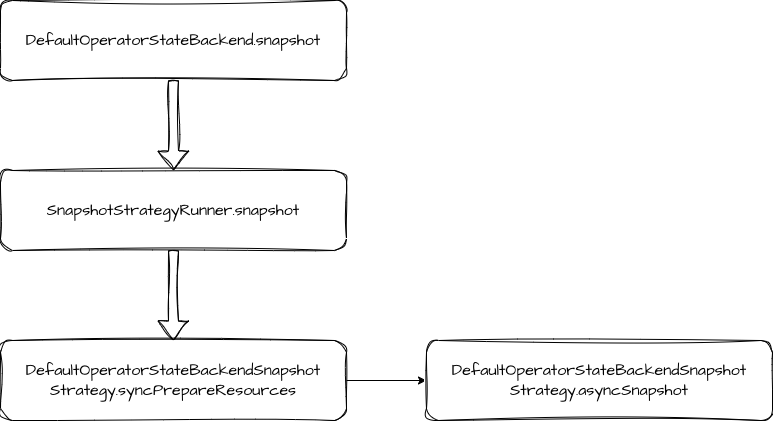
OperatorState 的处理逻辑比 KeyedState 更简单一些,流程上都是先做状态数据的引用快照,然后写入状态数据和返回结果。在写入数据时,没有了分组写入的逻辑。直接处理 operatorState 和 broadcastState。这里就只贴一下调用流程,不做过多赘述了。
总结
本文我们重点梳理了 KeyedState 数据写入的代码。其主要步骤包括:同步拷贝状态数据的引用,创建 Checkpoint 输出流 CheckpointStateOutputStream 并完成 Checkpoint 持久化,最后返回元信息结果。OperatorState 的处理过程和 KeyedState 的过程类似,只是少了分组的逻辑。